Text Boxes Black and Blue:
How console JRPG menus transformed
video game user-interfaces.
Conference paper peer-reviewed by the editorial board for RePlaying Japan. Versions of this talk have been presented at: Ritsumeikan University (2022), SCMS (2024), RePlaying Japan (2024), University of Amsterdam (2024), and Hong Kong University of Science and Technology (2025), and the full version will be included in my forthcoming book, Kinetic Control (MIT Press, expected 2028).
Abstract:
Menus saturate our world. They mediate how we interact with software and mitigate software’s “unknowability” (Chun 2011, Manovich 2013). Today, menus are seamlessly implemented into gameplay, even in fast-paced, real-time action games. They dilate players’ options and controls beyond the limitations of gamepad button presses (Galloway 2006). This paper expands on prior accounts (Crawford 1990, Nooney 2016) of this ubiquitous element of UI by focusing on the menu systems in JRPG battles—specifically in the first ten years of the Dragon Quest and Final Fantasy series (1984-1994). Through a historical analysis of their menu systems, this paper makes two connected arguments.
First, Dragon Quest’s adaptation of the RPG genre from a computer with a keyboard to a console (NES) with a gamepad required simplified user input. Designers Horii and Nakamura achieved this adaptation through the implemented of a menu selection system (Kohler 2016). This shift—from command-lines to menu-selection—popularized the previously-niche RPG genre, rapidly out-selling prior computer RPGs. Second, the development of flowing menu trees in games such as Final Fantasy IV, V, and VI, extended video game menu design to an end in-itself. In other words, while selection-based menus were originally implemented to accommodate NES gamepads, they eventually encouraged a form of interaction that we now call “menu navigation.”
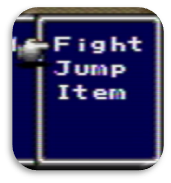
Supplemented with archival research conducted at Ritsumeikan University and the Strong Museum of Play’s ICHEG, the paper closely “reads” these JRPG menu systems, understanding them as historical and aesthetic objects. Menu navigation, in this specific context, becomes play through three properties: a select-cursor, minimalist menu selections, and real-time mechanics, such as Final Fantasy’s “active-time battle system.” In JRPGs, clicking through menus is the act of playing a battle. There is no combat gameplay outside of the menu, at all. Thus, with JRPGs, menus do more than merely facilitate or mediate actions; menu navigation becomes its own form of play. With the implementation of real-time elements in games like FFIV’s “active-time battle system,” the time it takes to make a menu selection effects the outcome of the battle. Thus, menu navigation requires a certain amount of proficiency from the player, whereby they have sufficiently memorized paths through menus. As players navigate through menus along branching paths, players experience a spatial process, not merely a hierarchical one.
References
Chun, WHK. Programmed Visions: Software and Memory (Cambridge, MA: MIT Press, 2011), 2-3.
Crawford, C. (1990). “Lessons from computer game design” in The Art of Human-Computer Interface Design. Laurel (ed.). Addison-Wesley Longman Publishing, 103-112.
Galloway, A. (2006). “Game Action: Four Moments” in Gaming: Essays on Algorithmic Culture. University of Minnesota Press, 1-38.
Kohler, C. (2016). Power-Up: How Japanese Video Games Gave the World an Extra Life. Dover Publications.
Manovich, L. (2013). Software Takes Command. Bloomsbury.
Nooney, L. (2016). “Menu” in Debugging Game History. Lowood, Guins (eds.). MIT Press, 305-312.